
You have heard of the three trimesters. You have probably been tracking them. Weeks one to twelve. Thirteen to twenty-six. Twenty-seven to forty.But there is a fourth one. And almost nobody really talks about it until you are already in it, wondering what on earth is going on.
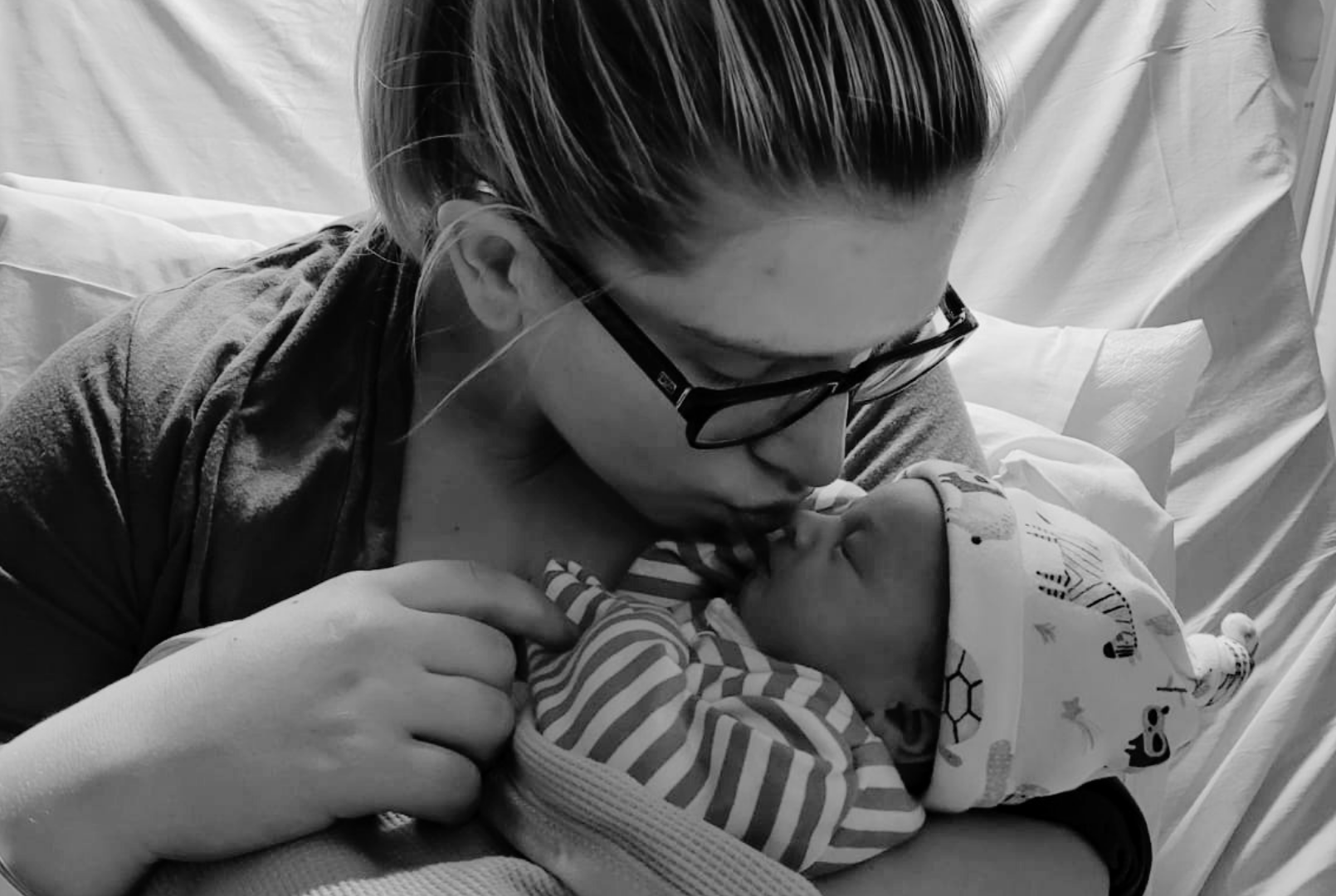
The fourth trimester is the first twelve weeks after your baby is born. And it is arguably the most intense, most transformative and most underserved period in the entire pregnancy and birth experience.
I want to talk about it honestly. Because I think the gap between what we are led to expect and what actually happens in those first few months is one of the main reasons so many new parents feel like they are failing when they are absolutely not.
What the fourth trimester actually is
The concept comes from research into why human babies are so helpless compared to other mammals. A newborn foal can stand within hours. A newborn human cannot do much except cry, feed and look around in a state of vague bewilderment.
The theory goes that human babies are born developmentally earlier than they should be, because if they were any more developed, their heads would not fit through the birth canal. So those first twelve weeks are essentially a continuation of the gestation that could not happen inside the womb. ¹
What that means in practice is that your newborn is not quite ready for the world yet. They need warmth, closeness and constant input from you. Your heartbeat, your smell, your voice. They are not being manipulative when they cry the moment you put them down. They are doing exactly what their biology is telling them to do. They were designed to be held.
Understanding this does not make it easier necessarily. You are still exhausted. You still need to put them down sometimes. But it does reframe the experience. Your baby is not broken. They are not doing it wrong. Neither are you.
What is happening to you
Let us talk about the parent for a minute. Because the fourth trimester is not just about your baby. It is about you too, and that often gets completely lost.
In the weeks after birth, your body is going through a recovery process that is, frankly, enormous. Regardless of how your birth went, vaginal or caesarean, straightforward or complicated, your body has done something remarkable and it needs real time and real support to recover.
Hormonally, you are in freefall. During pregnancy, oestrogen and progesterone are at the highest levels they will ever be. In the days after birth they drop dramatically. This is normal. It is part of the process. But it is also responsible for the baby blues that most new parents experience around days three to five. The inexplicable tears, the emotional fragility, the feeling that everything is simultaneously wonderful and completely overwhelming. ²
This usually passes within a week or two. If it does not, if the low mood, tearfulness or feelings of disconnection persist or get worse, that is worth talking to your GP or health visitor about. It is not weakness. It is not failure. It is a medical situation that responds really well to the right support. Please do not wait it out alone.
The sleep bit
Newborns sleep a lot. They also sleep at completely the wrong times and wake frequently through the night, which means that despite all that sleep happening in your house, you are probably getting very little of it.
Sleep deprivation is one of the hardest parts of early parenthood and it is almost impossible to explain to someone who has not experienced it. It affects your mood, your memory, your ability to make decisions, your patience, your emotional regulation. Everything becomes harder when you are running on empty. ³
A few things worth knowing. This does not last forever. I know it does not feel like that at 3am when you have been awake since 11pm and the baby has just woken up again, but it is temporary. Genuinely.
Sleep when the baby sleeps is genuinely good advice that is often genuinely impossible to follow. The dishes need doing. The other child needs something. You just want ten minutes of quiet without a person attached to you. All of that is valid.
Ask for help. Be specific. Can you hold the baby for two hours on Saturday morning so I can sleep is a much more useful request than I am really tired. People want to help. They often just need to be told exactly how.
Feeding, whatever that looks like for you
Whether you are breastfeeding, bottle feeding, combination feeding or doing something else entirely, the early weeks of feeding your baby are often harder than anyone tells you they are going to be.
If you are breastfeeding, your milk comes in around days three to five. Before that you are producing colostrum, the thick golden first milk that is perfectly designed for your newborn and comes in small amounts because your newborn's stomach is small. It is not a sign that you do not have enough. It is exactly what your baby needs. ⁴
Feeding can take time to establish. Latching can be tricky. It can be uncomfortable. There is a learning curve for both of you. If you are struggling, please reach out to a breastfeeding specialist or your health visitor rather than assuming something is fundamentally wrong.
And if feeding does not work out the way you hoped, for whatever reason, that is okay too. A fed baby and a parent who is coping is the goal. There is no medal for suffering through something that is not working.
The identity bit, which nobody prepares you for
Something happens when you become a parent that is very hard to describe until you are in it.
You do not just gain a baby. You gain an entirely new identity, and you simultaneously have to figure out what has happened to the one you had before. Who you were before the baby. What you liked. What mattered to you. Where you ended and this new role began.
For some people this is a joyful unfolding. For others it is disorienting and even grief-like, grieving the freedom, the sleep, the spontaneity, the version of yourself you used to know.
Both of these responses are completely normal. You are allowed to love your baby completely and also miss your old life. Those two things are not in conflict. They can exist at the same time.
This shift, sometimes called matrescence, is one of the most significant psychological transitions a person can go through. It deserves acknowledgement. It deserves to be talked about. And it deserves support. ⁵
What actually helps
Lower your expectations. Genuinely. The house can be messy. The thank you cards can wait. The baby weight does not need to be worked off by your six week check. Your only job right now is to keep yourself and your baby safe, fed and as rested as you can manage.
Get outside when you can. Even a short walk makes a difference to mood. The light, the movement, the change of scene. It will not fix everything but it will almost always help a bit.
Find your people. Other parents who are in the same season as you. Baby yoga, postnatal groups, a coastal walk. Community does not just appear. Sometimes you have to go looking for it. But when you find it, it really is everything.
And be honest about how you are actually doing. Not fine thanks honest. Actually honest. With your partner, your midwife, your health visitor. The fourth trimester is hard and you do not have to perform okayness.
If you are in the thick of it right now
If you are reading this at some night feed, half asleep, wondering if it is always going to feel this hard, it will not. That is not a platitude. It is just true.
The fourth trimester is an adjustment. A massive one. And like most big adjustments, it gets easier as you find your footing.
You are doing better than you think. The fact that you are here, reading things, trying to understand what is going on, that is exactly what good parenting looks like. It does not have to look put together. It just has to be trying.
At Nurtured Birth and Beyond I work with parents across the whole journey, before birth and after it. My baby yoga sessions are designed specifically for the postnatal period. They are gentle, supportive and happen in a warm space with other parents who are in exactly the same boat.
I have also put together a free guide specifically on navigating the fourth trimester. The practical and emotional stuff, written in plain English without the sugarcoating. Drop me a message or keep an eye on the website if you would like a copy.
You are not alone in this. I promise.
References
- Trevathan, W. (2011). Human Birth: An Evolutionary Perspective. ncbi.nlm.nih.gov/pmc/articles/PMC3406210
- NHS (2023). Baby blues and postnatal depression. nhs.uk/mental-health/conditions/post-natal-depression
- Bhatt, R. et al. (2022). Sleep deprivation in new parents. ncbi.nlm.nih.gov/pmc/articles/PMC9294025
- UNICEF UK Baby Friendly Initiative (2021). Colostrum and early breastfeeding. unicef.org.uk/babyfriendly
- Matrescence. Aurelie Athan, Columbia University (2020). aurelieathan.com